Did Large Carnivores Influence Dune Formation in Ice Age Georgia?

July 26, 2018

Over 100 years ago Australians built a 3480 mile long fence to keep dingoes away from livestock. For ecologists this provides a grand experiment of how the exclusion of a large predator influences ecosystems. However, there exists a considerable amount of conflicting scientific literature about this. Many studies report overgrazed regions on the dingo-less side of the fence that have poor soils as a result. The fence bisects a national park. One study confined to part of this park counted 85 dingoes and 8 kangaroos on the side of the fence with the dingoes, and 1 dingo and 3200 kangaroos in a comparably sized lot on the side that is supposed to be without dingoes. Tame livestock, feral goats and hogs, and rabbits along with the kangaroos contribute to these overgrazed landscapes. Parma wallabies, the greater bilby, and small rodents thrive on the side of the fence with the dingoes because the large canines suppress populations of smaller predators. Another study that claims to be more comprehensive than any other found no differences between either side of the fence. The authors of this study suggest there are no differences because dingoes have never been completely eliminated on the supposedly dingo-less side of the fence. They say other studies concluding there is a difference are local and anecdotal.

Image result for dingoes and sand dunes

Dingo on a sand dune.

I think the most interesting study is a recent paper that found the presence of dingoes influenced sand dune formation in arid regions. On the dingo-less side of the fence sand dunes were larger and stabilized with shrubby plants growing on top. On the side of the fence with dingoes sand dunes were more shallow, bald, and dispersed by wind because plant growth was sparse. This seems counterintuitive. But this difference in dune formation is caused by the suppression of small carnivore populations. Dingoes reduce populations of foxes and feral cats (neither of which are native to Australia). In turn dusky hopping mice and rabbit populations increase, and they eat the seeds of plants and shrub saplings that keep dunes stabilized.

This last study is most interesting to me because sand dunes rolled across parts of Georgia during the coldest driest stages of Ice Ages, and I wonder if large predators influenced their shape and pattern. The arid climate caused some small rivers in Georgia to run dry. Wind blew the riverine sand into big dunes that are still evident today, though scrubby vegetation has since stabilized them. (See: https://markgelbart.wordpress.com/2012/04/09/the-ohoopee-sand-dunes/ ) I’ve hypothesized overgrazing by megafauna alongside shrinking water holes located in the river bed may have contributed to the erosion leading to sand dune formation. But maybe the presence of large carnivores played a role as well. Dire wolves, jaguars, and cougars suppressed populations of bobcats and foxes; causing an increase in rodent and rabbit numbers. The small herbivores stripped the vegetation bare, allowing sand dunes to roll. On the other hand hawks, owls, and snakes probably always remained abundant, and they likely provided a check on rodent and rabbit populations. Nevertheless, the notion large carnivores may have influenced dune formation in Georgia is an intriguing idea.

References:

Glen, A.; and C. Dietman, M. Soule, and B. Mackey
“Evaluating the Role of the Dingo as a Trophic Regulator in Australian Ecosystems”
Australian Ecology August 2007

Harris, Emma
“Dingoes have Changed the Actual Shape of the Australian Desert”
The Atlantic July 6, 2018

Piedmont Plant Species Bartram First Encountered at the Augusta Shoals

July 22, 2018

I’ve read all or parts of Bartram’s Travels hundreds of times, but whenever I re-read it I always find something new that fascinates me.  William Bartram journeyed from Savannah, Georgia to Augusta during 1773, and in his book he describes the flora of the maritime forests, lower coastal plain, and upper coastal plain.  The descriptions are so packed with information I didn’t notice until recently a small paragraph about some piedmont plant species he first encountered alongside the shoals of Augusta.  He refers to this spot as a cataracts.  Several important Indian trails converged here because the shoals afforded a shallow crossing.  Augusta developed as an Indian trading village because of these shoals.  Bartram describes Augusta as a small village that reaches all the way to the “cataracts,” and it was surrounded by “gay lawns and green meadows.”  Augusta is on the edge of the hill country, and species that prefer higher elevations begin to occur here.  Bartram arrived in May when all of these species were in full bloom.  He listed Rhododendron ferruginumPhiladelphus inodorus, Malva, and Pancratium fluitans.   I haven’t visited the shoals in a while, but I don’t recall seeing any of these species next to the shoals.  They’ve been eliminated from the immediate vicinity, though the first 3 are commonly planted as ornamentals in people’s yards.  Bartram wrote Pancratium fluitans inhabited every rocky islet on the shoals.  (The common name of this species is rocky shoals spider lily.  It’s modern scientific name has been changed to Hymenocallis coronaria.)  Unfortunately, today there are just 50 populations of this species left because reservoirs inundate their favored habitat.  The natural beauty of rocky shoals has diminished since Bartam saw them.

Scenes around Augusta, Georgia - Savannah River shoals - Stock Image

Augusta shoals.  The lock was built 100 years after Bartram saw it.

Image result for rhododendron ferrugineum

Rhododendron ferrugineum is a common ornamental plant in Augusta.  It grew wild near the Augusta shoals.

Image result for Philadelphus inodorus

Scentless mockorange is also commonly planted as an ornamental but wild populations grew near the shoals.

Image result for malva sylvestris

Common mallow is a non native species that was already widespread in Augusta by 1773.  This is probably the Malva species Bartram mentions.  There is a native species of mallow–Carolina mallow (Modiola caroliniana), however Bartram described the mallow he saw as blue, and this is the wrong color for Carolina mallow.

Image result for Pancratium fluitans

Rocky Shoals spider lily.  Only 50 populations of this species still exist.  Most have been wiped out by reservoir creation.  In Bartram’s day they inhabited every rocky islet on the Augusta shoals.

Pleistocene Peaches (Prunus kunningensis =P. persica)

July 17, 2018

The ancestor of the modern cultivated peach (P. persica) depended upon megafauna for dispersal and is now extinct in the wild.  Asian elephants and primates such as macaques and early humans ate the fruit and distributed the seeds throughout the environment, but without these species P. persica disappeared from the wild, and now only exists in cultivated fruit orchards tended by modern humans.  Peaches originated in China, and peach seeds dating to 2.5 million years BP have been found there.  Scientists designated these ancient peaches as a unique species they refer to as P. kunningensis, but they admit there is no real difference between this species and P. persica.  Peaches have been cultivated in China for at least 7500 years where evidence of early peach cultivation has been found in the Yangtze River Valley.  Farmers began grafting varieties with larger fruit to pit ratios on to root stocks of other peach trees then.

Peach cultivation spread from China to Persia (today known as Iran) and from there to Europe.  Early Spanish explorers brought the fruit to southeastern North America during the 1500’s, and John Lawson found peach trees thriving in Indian villages when he explored and settled in North Carolina between 1700-1711. (See: https://markgelbart.wordpress.com/2012/07/27/john-lawsons-voyage-to-carolina-1700-1711/ )  The quality of some of the fruit was so much better than European peaches Lawson mistakenly thought some varieties originated in North America.  The real reason American peaches were better than the European fruit was because the climate in southeastern North America was similar to their land of origin–China.  Lawson planted peaches in his orchard, and he had 1 freestone yellow nectarine tree that produced 15-20 bushels every year, unless there was a late spring frost. (A nectarine is simply a smooth-skinned variety of peach.)  He claimed peach trees planted from seed bore fruit in 2-3 years, and the fruit from the offspring was the same as from the parent.  Peaches were so abundant he fed the excess fruit and corn to the hogs, resulting in sweet pork. He also made vinegar from peaches.

Lawson’s account of raising a peach orchard from seeds fascinated me.  Most fruit varieties are mutants grafted on to rootstocks because most wild trees produce fruit of inferior quality.  I researched online and found a discrepancy.  Some agreed with Lawson and claimed fruit from peach seeds produced fruit similar to their parent, but a study written by an horticulturalist from LSU found that fruit grown from seed was usually inferior.  So I conducted my own experiment.  I noticed peach trees often germinated in my compost pile.  I took these seedlings and transplanted them in my yard.  Now, 5 years later I have 4 trees that are bearing heavily.  1 tree produces freestone peaches during the last 2 weeks of June.  All the peaches on this tree were infested with plum curculio larva.  Plum curculio is a beetle that damages all kinds of fruit.  However, I cut away the worm-infested, bird-pecked parts and tasted the fruit.  (Birds get a double treat from my peaches–fruit and protein.)  For an early ripening variety it is a good peach.  The other 3 trees have fruit that ripens throughout July.  1 of them was partially infested with plum curculio, but the fruit is excellent.  Another tree produces very large peaches that are as good as the best farmer’s market peaches.  The 4th tree produces small, bitter, heart-shaped peaches that in appearance resemble the most common variety grown in Georgia and South Carolina–the red globe peach.  I’ve concluded Lawson was mostly right, and the LSU study was wrong.  75% of my peach seeds produced good quality fruit.

Late June peaches from a tree I planted from seed in my yard.  The fruit from this tree had an 100% plum curculio infestation rate.  They were still edible, if I cut away the damaged part.  The quality was good for an early season peach.

This tree produces large luscious peaches. None were insect-damaged but some cracked open because of rain, even though the soil in my yard is sandy and well-drained.  This was the best-tasting peach I ate all season.

This tree is a bit of a natural dwarf.  The fruit is small and bitter.  I’ve read thinning out the fruit may have improved the quality.  I might try that next year.

My experience with this peach tree growing experiment has taught me a few things.  Spraying insecticide doesn’t work.  Rain washes the insecticide off, and the insects just return.  The peaches with no insect damage were growing in open sunlight with no undergrowth.  I hypothesize shade and undergrowth shelters insects from predators and harsh sunlight.  I can’t do anything about reducing the shade over my other 2 peach trees, but I will try harder to control the Virginia creeper.  This vine is tenacious, but I think a thicker layer of mulch might suppress it.  Peaches need more nitrogen than other fruits–more evidence they evolved in plots rich in megafauna manure.  My fastest growing peaches just happen to be growing over the drain field to my septic tank.

The Georgia extension office recommends 58 varieties of peaches, but they don’t even list 3 of my favorite varieties–Indian blood cling, Oregold, and Halehaven.  Peaches stay in storage for just 2 weeks, so many varieties that have different ripening schedules have been developed to extend the season.  They recommend 1 late April variety, 12 May varieties, 16 June varieties, 23 July varieties, and 6 August varieties.  The mid-season free-stone peaches are the best-tasting.  There are also white peaches.  These are sweeter and more aromatic, and in my opinion taste like a completely different fruit.  After my difficult experience however, I recommend other fruit for the casual home gardener in Augusta, Georgia.  Blueberries, figs, muscadine grapes, and even apples are much easier to grow than peaches here, even though Georgia is known as the peach state.

References:

Su Tao; et. al.

“Peaches Precede Humans: Fossil Evidence from Southwest China”

Scientific Reports 2015

A 9 Mile Long Dogwood and Magnolia Grove in Alabama (circa 1775)

July 12, 2018

When William Bartram traveled through the south from 1773-1776 he observed many environments that today are either extinct or very rare.  In southern Alabama just east of Mobile he journeyed through a grove of dogwoods and magnolias that was 9 miles long.  This is how he described it.

We now enter a very remarkable grove of Dog wood trees (Cornus florida) which continuing nine or ten miles unalterable, except here and there a towering Magnolia grandifloria; the land on which they stand is an exact level; the surface a shallow, loose, black mould, on a stratum of stiff, yellowish clay; these trees were about twelve feet high, spreading horizontally; their limbs meeting and interlocking with each other, formed one vast, shady, cool grove, so dense and humid as to exclude the sun beams at noon-day.  This admirable grove by the way of eminence has acquired the name of the Dog woods.

The existence of an almost pure stand of dogwoods this large has long puzzled me.  Dogwood is a common understory tree throughout the south but I’m unaware of any natural location where it largely dominates as a canopy species.  Recently, I reread the passage, and the next morning I had a eureka moment–I believe passenger pigeon flocks created this unusually large stand of dominant dogwood trees.  The dogwood grove Bartram observed was likely the site of a massive passenger pigeon roost 50-100 years before he traveled through it.  Flocks of migrating passenger pigeons (Ectopistes migratorius) formerly caused eclipses of the sun lasting for 6 hours, and when they roosted their colonies would so damage the forest it would appear as if a tornado had struck.  The weight of the roosting birds would bust limbs and even crack enormous tree trunks in half.  The dung overfertilized the trees, often killing all of them.  These enormous colonies covered many square miles.  This explains the extent of Bartram’s dogwood grove.

Dogwood trees were already common in the understory of the forest, and the fruit ripens in the fall…exactly when passenger pigeons migrated to the south after nesting in the midwestern states.  It seems likely passenger pigeons fed on the dogwood and magnolia berries in the surrounding forest, and deposited the still viable seeds under their roosts in their dung.  Dogwood trees sprouted in the nutrient rich soil and thrived in the open sunlight created when the overstory trees were destroyed by the passenger pigeons.

Map of Alabama highlighting Conecuh County

Bartram’s dogwood grove was probably located in Conecuh County, Alabama.

Image result for passenger pigeon migration

Passenger pigeon migrations eclipsed the sun.

Bartram describes adjacent open plains that also resemble a landscape recovering from a passenger pigeon invasion.  Most of the 70 mile forest surrounding the dogwood grove consisted of oak, hickory, black walnut, elm, sourwood, sweetgum, beech, scarlet maple, buckeye, and black locust with an understory of dogwood, crabapple, and plum.  (Chestnut and pine grew on rocky hills.)  But some pockets of treeless plains within the forest and alongside the dogwood grove were composed of shrubs covered in grape vines.  The shrubs included silver bud, buckeye, bignonia, azalea, and honeysuckle.

Image result for Cornus florida fruit and berries

Dogwood berries.  Passenger pigeons ate them.  They taste bittersweet to me.

Image result for Flowering dogwood

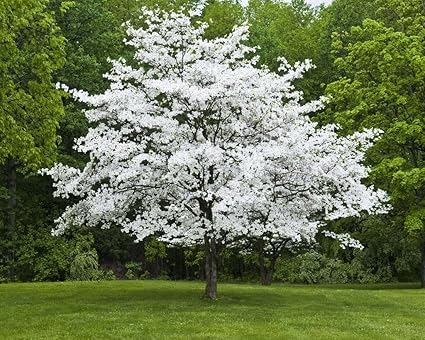
Flowering dogwood.  Bartram’s dogwood grove must have been beautiful during early March when the tree blooms.

I’ve always wondered how forests recovered following an invasion of passenger pigeons.  It didn’t occur to me until just recently that Bartram had described just such a site, though he was unaware of how the landscape he described originated.  In summary I shall list the lines of evidence for my hypothesis that Bartram’s dogwood grove was the result of a massive passenger pigeon roost 50-100 years earlier.

  1. The size of the site (9 miles in extent) is the same size as many passenger pigeon roosts described by colonists.
  2. Heavily fertilized soils support monocultures.  The site, fertilized by pigeon dung, supports just 1 dominant species with 1 minor component.
  3. From Bartram’s description all of the dogwood trees appear to be the same age, suggesting they all germinated during the same year.
  4. Passenger pigeons arrived in the region when dogwood trees bear fruit.  This makes my hypothesis plausible because passenger pigeons are the only species that could have planted dogwood seeds on such a large scale.
  5. Adjacent areas also appear to be recovering from a passenger pigeon invasion.  Bartram describes pockets of plains where there are no overstory trees, just shade intolerant shrubs covered in grape vines.
  6. The complete absence of overstory trees indicates a sudden traumatic tree-killing event in the recent past

The Pliocene Marine Extinction Event

July 5, 2018

A major marine extinction event rubbed out at least 36% of the ocean’s vertebrate genera about 2.5 million years ago.  Scientists believe the extinctions were caused by a sea level fluctuation, resulting from glacial expansion.  Ice Ages increased in intensity during the late Pliocene and as more atmospheric moisture became locked in glaciers, sea level fell.  Habitat for many coastal species simply disappeared because their near shore environments rose above sea level.  A new study determined 55% of marine mammals, 43% of sea turtles, 35% of sea birds, and 9% of sharks and rays went extinct. I believe this estimate may undercount the actual loss because there are likely some extinct species yet to be discovered by paleontologists.  Many species of invertebrates became extinct as well.

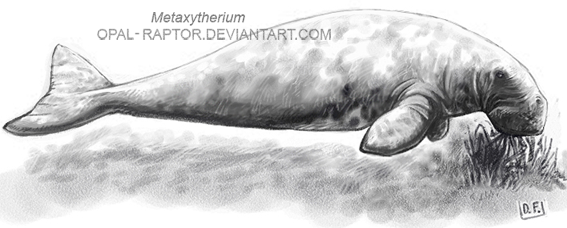
Most of the genera lost were impressive and interesting.  Metaxytherium were a widespread genera of dugongs that grazed sea grass off coasts all across the world.  Thalassocrus were a group of aquatic sloths that evolved from giant ground sloths.  Giant predatory sperm whales (Livyatan) preyed on whales.  Psephopherus, giant sea turtles, laid their eggs on beaches.  The islands off the coast of South Africa, where several species of extinct penguins nested, became connected to land when sea level fell, and predators were able to invade and destroy their colonies. And of course the famous giant white shark, Megalodon, hunted the many species of now extinct whales that lived during the Pliocene.  Most species of baleen whales were smaller and more agile then because they had to avoid these large predators.

Image result for Metaxytherium'

Metaxytherium floridanum swam near and over what today is Florida.

Image result for Thalassocnus

Thalassocrus, an aquatic genera of sloths.

Image result for Livyatan melvillei and megalodon

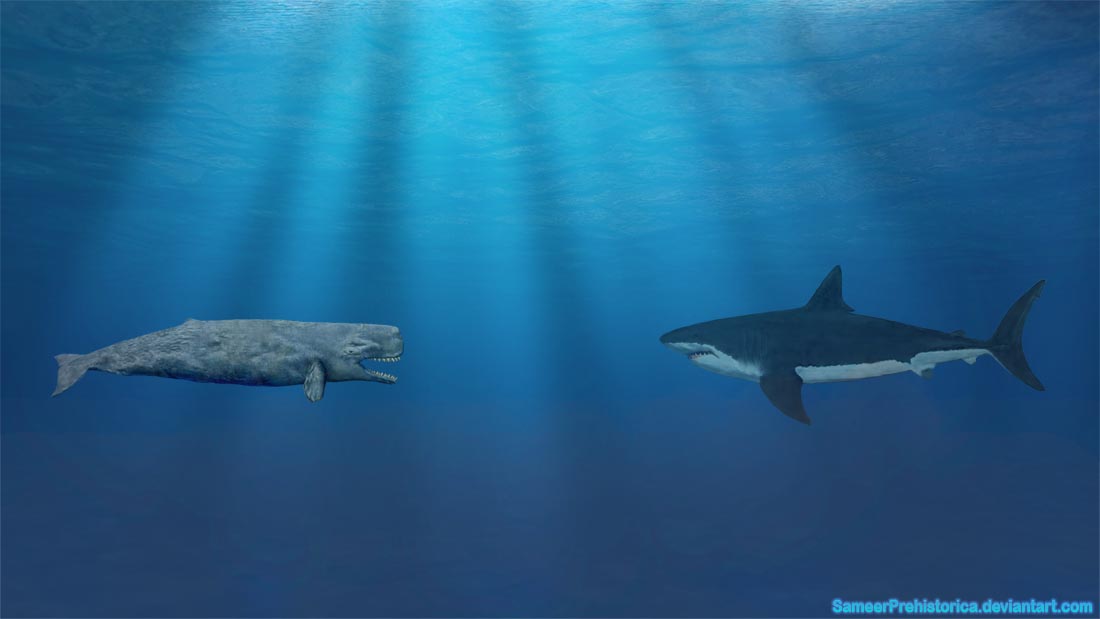
2 of the largest predators that lived during the Pliocene–Livyatan melvillei and Carcharocles megalodon.  Both grew to 60 feet long.  Baleen whales were smaller and more agile then, enabling them to escape predation.  The extinction of these predators allowed baleen whales to evolve to a greater size, so they can gorge on food, then fast when they migrate to warmer calving grounds where killer whales, their only modern marine predator, are uncommon.

During the Pleistocene new marine species evolved that were better adapted to the fluctuating sea levels of alternating glacials and interglacials.  New genera increased by 21%.  However, this means there is still a deficit of -15% fewer marine vertebrates than there were during the Pliocene.  Sea life may reclaim the land though, if sea levels keep rising.

An octopus recently found its way into a Miami parking garage.  If sea levels keep rising, marine life may reclaim territory it lost during Ice Ages.

Reference:

Pimiento, C. et. al.

“The Pliocene Marine Megafauna Extinction and its Impact on Functional Diversity”

Nature Ecology and Evolution 1 June 2017

The Adaptability of Pleistocene Peccaries

June 30, 2018

Two lineages of peccaries lived all across North America for over 5 million years but both became extinct about the time man appears in the archaeological record.  The long-nosed peccaries in the Mylohyus genus were forest edge species, and the flat-headed peccaries in the Protherohyus-Platygonnus genuses inhabited scrubby thickets.  A new study looked at dental microwear and bone chemistry in these lineages and compared them with the teeth and bone chemistry of the extant white-lipped peccary to determine the dietary similarities and differences of the extinct and extant species of peccary.  Peccaries in the Mylohyus genus co-existed with Protherohyus peccaries during the Miocene over 5 million years ago.  The former ate more woody browse and forest vegetation, while the latter mostly ate grass.  During the Pliocene between 5 million years BP-2million years BP both Mylohyus and Platygonnus ate mostly woody browse in Florida.  Their diets shifted during the early-mid Pleistocene with an increased consumption of grass.  During the late Pleistocene Mylohyus ate more forest vegetation such as twigs, acorns, and nuts, while Platygonnus ate more tough leaves and grass.  This study shows how adaptable these lineages were to environmental change–their diets shifted with changes in climate.  It seems obvious to me that overhunting and/or disruption of the overall ecosystem by humans, not whole scale environmental change, caused the extinctions of both Mylohyus and Platygonnus.  Surviving extant species of peccaries live in deserts and remote jungles where human populations remain sparse.

Image result for mylohyus nasutus

Image result for Platygonus compressus

Illustration of Platygonnus peccary.

Image result for white-lipped peccary

White-lipped peccaries eat forest vegetation.  They can be dangerous.

The proliferation of feral pigs (Sus scrofa) in North America today demonstrates how favorable the environment still would be for Pleistocene peccaries, if they still existed.  Pigs co-evolved with humans in Eurasia to produce large litters, making them capable of surviving human hunting pressure.  Pigs produce litters of 8-12, but peccaries only birth 2-4 young.

Some archaeologists reject the likelihood that humans hunted peccaries to extinction because there are no known kill sites, other than a peccary shoulder blade with a spear hole in it next to a spear.  See: https://markgelbart.wordpress.com/2014/03/10/the-sheridan-cave-pit-fossil-site-in-wyandot-county-ohio/

This is a ridiculous assumption. There are also no known white-tailed deer kill sites in the archaeological record, but we know Indians hunted deer.  Evidence humans killed Pleistocene peccaries simply faded away over time.

Reference:

Bradham, J. et. al.

“Dietary Variability of Extinct Tayassuids and Modern White-Lipped Peccaries (Tayassu pecari) as Informed from Dental Microwear and Stable Isotope Analysis”

Palaeogeography, Palaeoclimatology, Palaeoecology April 2018


New Study Supposedly Debunks Proposed Pre-Clovis Evidence from the Coats-Hines and Topper Sites

June 23, 2018

Archaeologists claimed they had “unequivocal” evidence humans butchered a mastodon at the Coats-Hines site located in Tennessee.  Now, some of these same archaeologists recently published a paper admitting their evidence was equivocal.  I wrote a beautiful article on my blog about the Coats-Hines site a number of years ago, and it always gets a lot of hits early during the school year because a teacher uses it as a reference for a school assignment.  Unfortunately, the assumption the site includes evidence of human-butchered mastodon remains may be bogus.  (See: https://markgelbart.wordpress.com/2013/04/15/the-coats-hines-pre-clovis-site-in-williamson-county-tennessee/ )

The Coats-Hines site is located adjacent to a golf course.  During construction of the golf course 40 years ago workers found the remains of a mastodon.  Further digging by trained experts over the years yielded the remains of 3 more mastodons, white-tailed deer, muskrat, turkey, and painted turtle.  This most recent paper noted the additional identification of ground sloth bones (probably Harlan’s) from the site.  A mastodon vertebrae apparently had cut marks on it, suggesting evidence of anthropogenic butchery, and it was associated with supposedly human-made artifacts.  In a paper published just 7 years ago the archaeologists wrote it was “unequivocal” evidence of human butchery.  However, in his more recent study Jesse Tune admits the cutmarks could’ve been caused by the bone being tumbled against rocks in an high energy stream environment.  He thinks the artifacts associated with that specimen are geofacts.  A geofact is a natural stone formation that resembles an human-modified object.  The stones come from local outcrops that naturally eroded into the stream.  There are definitive human-made tools at Coats-Hines, but they were found some distance away from the mastodon bones.  Coats-Hines was a former stream, and deposits of different ages can get mixed together when currents erode through different aged strata.

Jesse Tune used what he learned from studying the Coats-Hines site to debunk claims made for the antiquity of the Topper site in South Carolina, and the Burnham site in Oklahoma.  Archaeologists excavating these sites claim the evidence they found was older than the Last Glacial Maximum.  (The LGM dates to roughly between 18,000 years BP-22,000 years BP.)  Jesse Tune thinks the evidence at these sites consists of geofacts eroded from adjacent local outcrops that perhaps mixed with real artifacts of more recent origin in an high energy stream.

The new paper (referenced below) includes the Coats-Hines site as a proposed pre-LGM site.  This puzzles me because I can’t find anyone who ever claimed the artifacts and evidence from Coats-Hines dated to before 22,000 years ago.  The sediment around the mastodon bone thought by some to be butchered by humans produced a radio-carbon date of 13,100 years BP (~=15,000 calendar years BP).  This is well after the LGM.  I always considered Coats-Hines to be pre-Clovis but not pre-LGM.  It seems as if the authors of this paper are making a straw man argument because as far as I can determine, nobody claimed Coats-Hines was pre-LGM.

Image result for straw man

Who claimed Coats-Hines was pre-LGM?  I asked 2 authors of the below study but I didn’t get a response.  Are they making a strawman argument about Coats-Hines?

References:

Tune, Jesse; et. al.

“Assessing the Proposed Pre-Last Glacial Maximum Human Occupation of North America at Coats-Hines-Litchy, Tennessee and Other Sites”

Quaternary Science Reviews April 2018

Wolf, Aaron; Jesse Tune, and John Broster

“Excavations and Dating of Late Pleistocene and Paleoindian Deposits at the Coats-Hines Site, Williamson County, Tennessee”

Tennessee Archaeology 5 (2) Fall 2011

Pleistocene Puffer Fish (Spheroides maculatus)

June 16, 2018

Pier fishermen often catch what many consider to be “trash” fish.  Stingrays, eels, dogfish, and puffer fish are common in shallow coastal waters during the summer and readily take bait.  Although fishermen usually throw them back in the ocean, they are all good to eat.  Pieces of stingray wings cut with a cookie cutter are used to make mock scallops.  Eel is a delicacy I have enjoyed.  Dogfish, a small species of shark, really does taste like chicken when fried. During WWII when rationing made meat scarce, fishermen caught hundreds of thousands of pounds of puffer fish off Long Island and sold them in New York City fish markets under the name “sea squab.”  However, an important cautionary note needs to be made about consuming puffer fish–its flesh is toxic in some regions.  From researching this topic online, I’ve determined puffer fish caught from North Carolina to Massachusetts are safe to eat, but puffer fish caught from Florida south to the tropics are deadly.  It is against the law to consume puffer fish caught off Florida’s coast because it contains so much saxitoxin.  I have not been able to determine whether puffer fish caught in the border region in between Florida and North Carolina are safe, so I wouldn’t chance it.


Video of a man cleaning puffer fish caught off the North Carolina coast.  It yields a piece of fish about the size and shape of a chicken drumstick.

Image result for illustration of puffer fish before and after it blows up

Illustration of puffer fish before and after it blows up.

The northern Atlantic puffer fish, also known as a blowfish, is a member of the Tetraodontinidae family which includes 29 genera and 191 species.  Most of these species occur in tropical waters and are toxic.  The family includes the famous fugu fish served in Japan where specially trained chefs dress them in a way that makes them safe for human consumption.  Toxins are heavily concentrated in the liver and gonads.  Puffer fish inhale air or water when threatened, and they have prickly spines on their scales.  This makes them tough for predators to grasp or swallow.  Ospreys are unable to grab puffer fish.  This defense mechanism has helped this family survive for millions of years.  Definitive fossil evidence of species in the Tetraodontinidae family has been unearthed from strata dating to the Cretaceous over 100 million years ago, and some specimens that may belong to this family were found in Triassic deposits.

The northern puffer fish evolved to live in cooler waters than its tropical cousins.  Cooler ocean currents began to expand in circulation early during the Pliocene when Ice Ages began to occur.  This may be when the northern puffer fish diverged from the southern puffer fish (S. nephulus) which reaches its northern range limit off the coast of north Florida where the 2 species overlap.  In this area northern puffer fish inhabit deeper waters to avoid competion with S. nephulus.  Northern puffer fish move into shallow waters over most of the rest of their range during summer but move to deeper waters when the water temperature seasonally cools.  This pattern may have been disrupted following Ice Age Heinrich Events when  the Gulf Stream shut down due to influxes of glacial meltwater.  There is no known Pleistocene-aged fossil evidence of puffer fish, and scientists have not yet studied the Tetraodontinidae family genome.

Puffer fish prey on crustaceans (schools of puffer fish gang up on blue crabs), molluscs, worms, and sponges; and they consume seaweed and algae. The species of algae they eat in warmer waters is toxic, and this is how they acquire their toxicity.  This explains why the same species is safe to eat when caught from cold waters but toxic from warmer regions.  There is no antidote for this kind of nerve poison.  It shuts down the victim’s nervous system.  A victim may recover in a few hours or days or they may die from suffocation while wide awake as their lungs and heart cease to operate.

Banks, S.; and Anthony Pachee

“Biology and Fishing Data on Northern Puffer (Spheroides maculatus)

NOAA Report 26 1961

Gibbon, Euell

Stalking the Blue-eyed Scallop 

David Mackay Publishing 1964

Pleistocene Mockingbirds (Mimus polyglottos)

June 9, 2018

Mockingbirds are swingers.  Most suburban yards in southeastern North America host a pair of mated mockingbirds, but they might not remain the same pair throughout the breeding season because both males and females often switch mates.  Male mockingbirds sit on the top of trees and sing long melodious songs to attract female mockingbirds from adjacent territories, not unlike the way human pop singers attract groupies.  Female mockingbirds may leave their mates for better singers.  Males also flash their wings, and this entices female mockingbirds as well.  It doesn’t matter if a male already has a mate because they will continue to try and attract other females.  Constant mate switching ensures the genetic vigor of this species.  Despite this competition, mockingbirds from adjacent territories respond to their neighbor’s distress calls and will help drive away predators, such as crows.  Each territory of swinging and singing mockingbird mates can produce 2-4 broods per year.  Mockingbirds are an intelligent bird able to recognize individual humans, and they can imitate the calls of at least 14 other bird species as well as the vocalizations of cats, dogs, frogs, and crickets.

Photo of a mockingbird in my front yard.  Click to enlarge.

Northern Mockingbird-rangemap.gif

Northern mockingbird range.

I wonder how common mockingbirds were during the Pleistocene compared to today.  Studies show mockingbirds enjoy longer lives in suburban areas than they do in wilderness refuges.  Scientists believe mockingbirds prefer the stability of manmade habitats where they can find the same nesting sites, fruit trees, and insect species year after year.  They don’t have to travel far to find favorable habitat that might be dispersed in a wilderness.  I hypothesize mockingbirds were common in the south during most climate phases of the Pleistocene, but were not as common as they are today.  Mockingbirds probably occurred in forest edge habitat along megafauna trails maintained by the regular migration of herds.  Mockingbirds could rely on fruits originating from trees sprouting in seed-filled dung, and they fed on insects stirred up by roaming large animals.  Northern mockingbirds are uncommon in the fossil record.  They are known from just 3 specimens excavated from Reddick and 1 in Haile–both located in Florida.  Bahamian mockingbirds (M. gundlachii) left fossil evidence at the Banana Hole site in the Bahamas.  This paucity of fossil evidence doesn’t mean mockingbirds were an uncommon bird in the past.  Potential sites of fossil preservation in their favored forest edge habitat just didn’t exist to any great degree.

Genetic evidence does suggest mockingbirds have an ancient origin somewhere in South America where the most species of mockingbirds occur.  Mockingbirds belong to the Mimidae family which also includes thrashers and catbirds.  There are 14 species of mockingbirds: northern, tropical (M. gilvus), brown-backed (M. dorsalis), Bahama, long-tailed (M. longicauda), Patagonian (M. patagonicus), Chilean (M. thenca), white-banded (M. triuris), Socorro (M. graysonii), chalk-browed (M. saturninus), Floreana (M. trifusciatus), San Cristobal (M. melanotis), Hood (M. macdonaldi), and Galapagos (M. parvalus).  The northern mockingbird is a sister species to the tropical mockingbird, and they are so closely related they interbreed on the border region where their ranges overlap in southern Mexico.  The Chilean mockingbird is a sister species of the Patagonian mockingbird.  The uplift of the Andes mountains separated the founding population of these mockingbirds into 2 species.  Oddly enough, the Bahama mockingbird is a sister species to the 4 kinds of mockingbirds found on the Galapagos Islands including the San Cristobal, Galapagos, Hood, and Floreana.  Each of these species occupies just 1 or 2 Galapagos Islands.  Darwin wrongly assumed they were most closely related to South American species of mockingbirds due to the relative proximity.  But genetic evidence shows the mockingbirds that traveled over the Pacific Ocean to the Galapagos Islands came from even further away.  It seems likely this occurred before a land bridge connected North and South America.  Otherwise, the exhausted birds would’ve landed on Central America instead.  Unlike Darwin’s famous finches, mockingbirds didn’t evolve into different species that occupied different niches on each island, but instead remained habitat generalists, though each became a different species unique to the island they landed upon.

References:

Hoeck, P; et al

“Differentiation with Drift: A Spatio-Temporal Genetic Analysis of Galapagos Mockingbird Populations (Mimus spp.)”

Philosophical Transactions of the Royal Society of Biological Science 365 (1543) 2010

Lovette, I; et al

“Philogenetic Relationships of the Mockingbrids and Thrashers (Aves: Mimidae)”

Molecular Phylogenetics 2011


The Fear Island Special that Aired on Animal Planet Last Night was Full of Shit

June 4, 2018

The Animal Planet network has a history of airing misleading pseudo-science on many of their specials.  In their fake documentaries, researchers (usually actors posing as scientists) are on the hunt for creatures undiscovered by science.  In the past they have supposedly discovered evidence for mermaids and the continued existence of a long extinct shark species known as Carcharodon megalodon.  Last night, they aired a special culminating Monster Week entitled Fear Island.  A trio including a so-called scientist, a skeptic, and an Indian tracker were following a particularly large specimen of Kodiak bear.  The so-called scientist had a theory that Kodiak bears were either an hybrid between brown bears (Ursus arctos) X polar bears (Ursus maritimus) or an hybrid between brown bears X and an extinct species of bear from the Pleistocene (Arctodus simus).  They used camera traps and collected DNA samples from hair and feces to prove that this bear was an hybrid, and that it was 2600 pounds which would make it more than double the size of an ordinary Kodiak bear.  This gave the show a verisimilitude of real science, but it was not.

Image result for Fear Island on Animal Planet misleading

Don’t believe anything you see on Animal Planet.  They air unscientific bullshit.

There was a big problem with this special–scientists have already conducted many genetic studies of the Kodiak bear population.  Kodiak bears grow to more than double the size of the average mainland brown bear because of their diet…not because they are somehow a different species.  They enjoy an unusual abundance of salmon.  Genetic studies suggest Kodiak bears are the same species as the brown bear, and there is no admixture of polar bear in this population.  Moreover, the genetic studies indicate there is so little genetic difference between mainland brown bears and Kodiak bears that the latter should not even be considered a separate subspecies.  Nevertheless, at the end of the special Animal Planet claimed their genetic tests determined the Kodiak bear the hosts were following was a brown bear X polar bear hybrid, but tests to determine if there was giant short-faced bear DNA were inconclusive.  I promise, this supposed genetic test will never be subject to peer review in a real scientific journal because they were full of shit.  The giant short faced bear belonged to the Tremarctine group indigenous to the Americas, and these bears were separated from the Ursus bears by millions of years of evolution, making it highly unlikely that they ever interbred.  Plus, there is no genetic material of giant short-faced bears available for comparison.  So, of course, that finding would be inconclusive.

No way did the bear they were following weigh 2600 pounds as they estimated.  Any brown bear walking past a camera trap is going to look big, and I’m sure their estimate was badly miscalculated.  To prove it weighed that much, they would actually have to weigh it.

The Indian tracker told of an incident when 6 bears carried a dead bear to an hole they dug and buried it in a funeral like ceremony.  He told it with a straight face, but obviously he was pulling their leg.  Nevertheless, the so-called skeptic believed his story.  Don’t believe anything you see on Animal Planet.  This network lost its credibility a long time ago.


Design a site like this with WordPress.com
Get started